Derg Downfall Day (National Day) in Ethiopia ደርግ የወደቀበት ቀን
Derg Downfall Day, also called Ginbot 20 or National Day, marks the fall of Ethiopia's military Derg regime on May 28, 1991.
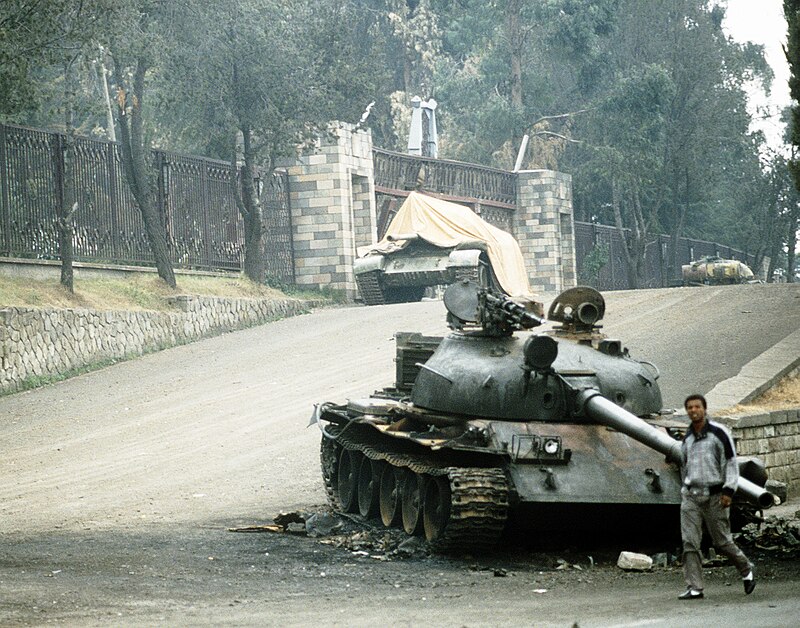
The Derg regime, 1974 to 1991
The Derg was a committee of low-ranking military officers that took power in September 1974 by overthrowing the eighty-three-year-old Emperor Haile Selassie I. Under chairman Mengistu Haile Mariam from 1977 onward, the Derg ran a Marxist-Leninist single-party state that nationalized land and industry, fought multiple civil wars, and conducted the Red Terror, a campaign of state killings that took the lives of tens of thousands of Ethiopians, especially university students and members of rival leftist movements.
The regime collapsed under the combined pressure of the Ethiopian People's Revolutionary Democratic Front (EPRDF), the Eritrean People's Liberation Front (EPLF) advancing on Asmara, the Tigray People's Liberation Front (TPLF) advancing on Addis Ababa, the loss of Soviet backing after the fall of communism in Europe, and the famine of the late 1980s. Mengistu fled to Zimbabwe on May 21, 1991. EPRDF forces entered Addis Ababa on May 28.
What May 28 marks
The day marks the end of the longest period of Ethiopian autocracy in the modern era and the transition to the federal constitution of 1995. It is also a day of national memory for the human cost of the Derg years. Many Ethiopian families lost relatives. The Red Terror Martyrs' Memorial Museum in Meskel Square, Addis Ababa, preserves names, photographs, prison letters, and personal effects of the dead.
The political meaning of the day has shifted with the country's politics. For some Ethiopians it is a celebration of liberation. For others it is a day of mourning and a moment to debate the country's continuing political evolution. For all, it is a working public holiday and a marker of historical memory.
1991 in African history
The Derg's fall came in the same year as the lifting of the South African states of emergency and the final negotiations that ended apartheid. The Soviet collapse in late 1991 ended Cold War proxy conflicts across Africa from Angola to Mozambique to the Horn. Ethiopia's transition is studied across the continent as one of the major African political turning points of the 1990s.