Eid al-Adha (Arefa) in Ethiopia አረፋ
Eid al-Adha (አረፋ, Arefa, the Festival of Sacrifice) is the second Islamic Eid, falling about two and a half months after Eid al-Fitr on 10 Dhu al-Hijjah in the Hijri calendar.
It comes the day after Hajj pilgrims complete the Day of Arafah at Mount Arafat. In Ethiopia the holiday is commonly called Arefa, after that mountain. It is a public holiday alongside Eid al-Fitr.
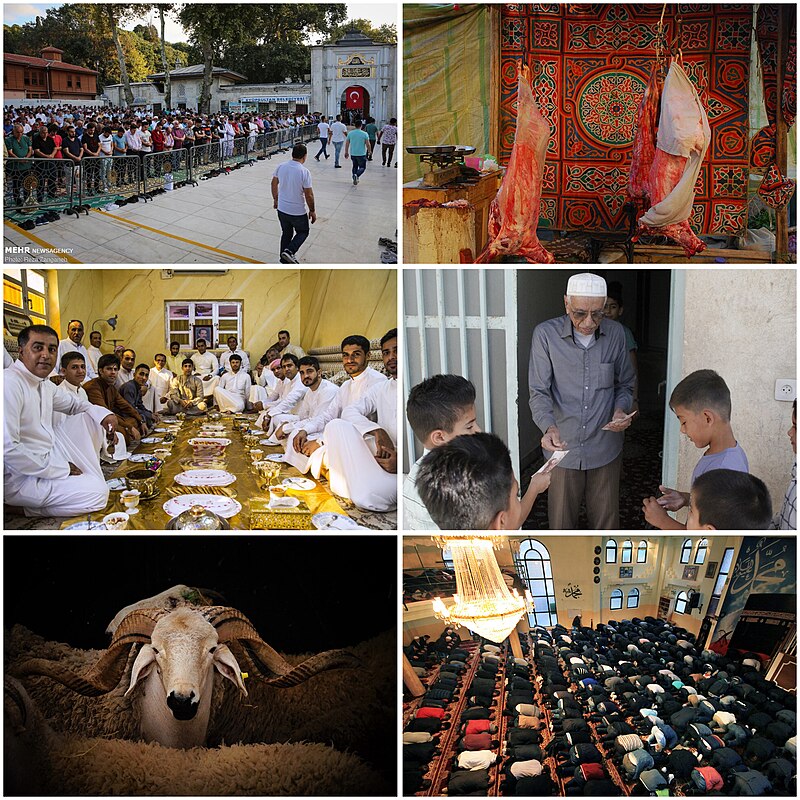
The story of the sacrifice
The festival commemorates Prophet Ibrahim's (Abraham's) willingness to sacrifice his son in submission to God, and God's substitution of a ram in his place. The story is shared with Christianity and Judaism but observed in Islamic form on this date because it coincides with the climax of the annual Hajj pilgrimage to Mecca, which thousands of Ethiopian Muslims undertake each year. The Hajj is one of the five pillars of Islam and obligatory once in a lifetime for those who are physically and financially able.
How Ethiopians celebrate Arefa
Sunrise prayer
The day begins with the same large open-ground prayer as Eid al-Fitr. The takbir is recited from before the prayer through the four days of the festival.
Qurbani: the slaughter and three-part division
Families who can afford it slaughter a sheep, a goat, or sometimes a cow on the morning of Eid. The meat is divided into three parts: one for the family, one for friends and relatives, and one for the poor. The third for the poor is the central social practice. In Harar, in the rural Oromo highlands, in the Somali Region, in Afar, and in Wollo, the distribution of Qurbani meat among neighbors regardless of religion is a deep, centuries-old custom. Christian neighbors receive a portion. Mosques organize the distribution to households without livestock.
Family meals
Roasted meat (tibs), kitfo or quanta firfir in the highlands, suqaar or skudahkharis in the Somali region, biryani-style spiced rice dishes (bilash), shorba (lentil soup), and dates fill the table. Sweet dishes follow: halwa, baklava, and Wollo-style sweet doughs.
A worldwide festival of sharing
The Qurbani slaughter and three-part division is one of the great surviving examples of communal sharing in Muslim religious life. From Morocco to Indonesia, from Ethiopia to Pakistan, the same practice ties an estimated two billion Muslims worldwide on a single day. The custom of inviting Christian neighbors to receive a share is one of the practical ways Ethiopian Muslims and Christians have lived alongside each other for fourteen centuries, since the days of the Najashi.