Eid al-Fitr in Ethiopia ኢድ አልፈጥር
Eid al-Fitr (Eid Al-Fiṭr, ኢድ አልፈጥር) is the Islamic feast that breaks the month of Ramadan fasting. It is the first of the two major Eid celebrations and a public holiday in Ethiopia.
The largest celebrations take place in the historic Muslim cities of Harar and Wollo, in southern Oromia and Sidama, in the Somali Region, in Afar, and at the great open prayer grounds of Addis Ababa.
Ethiopia and the first hijra
Ethiopia is the first country to receive and protect Muslims. In the year 615 CE, the Prophet Muhammad sent his early followers, including his cousin Ja'far ibn Abi Talib and the future caliph Uthman ibn Affan, to Aksum to escape persecution by the Quraysh of Mecca. The Christian Aksumite king, the Najashi (Negus) Ashama ibn Abjar, granted them sanctuary. When Quraysh envoys arrived bearing gifts and demanded the refugees back, the king refused. The traditional narration preserved in Ibn Ishaq's Sirah records his words: "Go your way, for you are safe in my country. By God, I would not have a single one of you injured for a mountain of gold." The Prophet later forbade his followers from raiding Ethiopia and described the kingdom as "a land of righteousness where no one is wronged."
That episode, called the First Hijra, makes Ethiopia central to early Islamic history. It was the first refuge for the Muslim community, seven years before the Hijra to Medina. Harar in eastern Ethiopia has been called the fourth holy city of Islam after Mecca, Medina, and Jerusalem. The walled medina of Harar, a UNESCO World Heritage Site, contains 82 mosques inside its walls, three of them dating from the 10th century, and 102 shrines. The Najashi mosque at Negash in Tigray, founded by the original refugees during the First Hijra, is, by tradition, older than the Prophet's own mosque at Medina, making it one of the oldest mosques in the world.
How Ethiopians celebrate Eid al-Fitr
Ramadan, the month before
Ramadan is the ninth month of the Hijri calendar. From dawn to sunset, observant Muslims abstain from food and drink. Iftar at sunset, with dates, water, and traditional foods, breaks the fast each day. Sahur is taken before dawn. Mosques fill for taraweeh prayers each night. Because the Hijri calendar is purely lunar, Ramadan and Eid al-Fitr move earlier on the Gregorian calendar by about ten to eleven days each year, cycling through every season over roughly 33 years. The exact Gregorian date of Eid is sometimes announced as tentative and confirmed only after the moon sighting on the last evening of Ramadan.
Eid morning
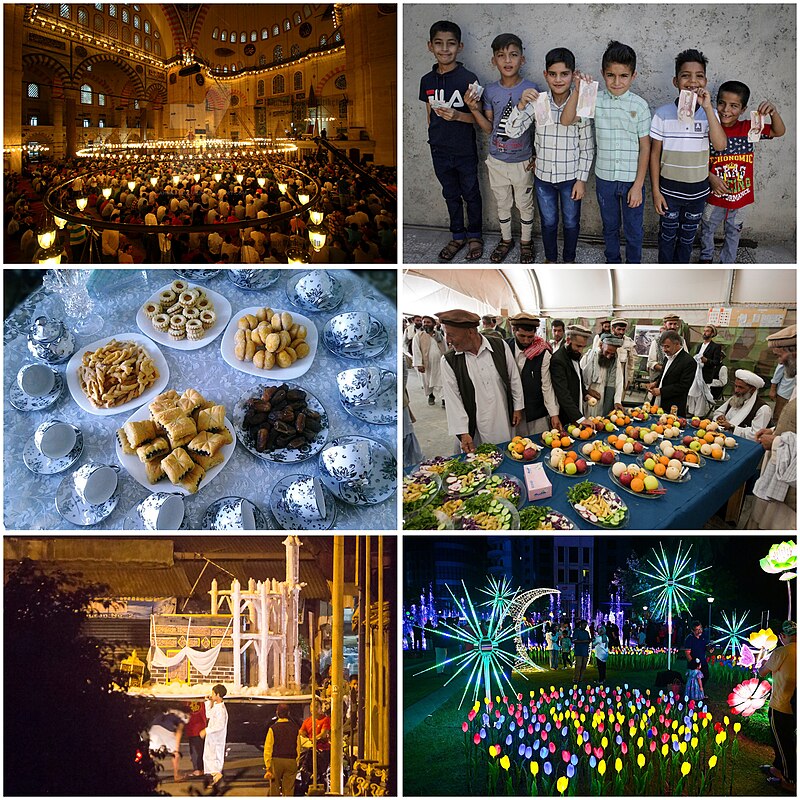
Shortly after sunrise on the day of Eid, the community gathers for the salat al-Eid, a special communal prayer held on a large open ground. The Addis Ababa central prayer is held at the Addis Ababa Stadium grounds and at Anwar Mosque. Worshippers dress in their finest clothes, often white kemis or jallabiya, the embroidered Harari kuta and shash, the Afar sanafil, or the Somali macawiis.
Family visits and food
After prayer, families visit each other through the day. Children receive Eidi (cash gifts). Tables are set with sambusa, halwa, hilbet, fata bread soaked in spiced sauces, kitfo, and beef or chicken stews. Each region has its own specialties: Harari hubaza and shorba, Wollo sweet kitfo, Afar slow-roasted meat over open flame, Somali bariis iskukaris and skudahkharis. Reconciliation with anyone you have feuded with during the year is a central practice.