Labour Day in Ethiopia የላብ አደሮች ቀን
Labour Day in Ethiopia falls on May 1. The day is officially called Yelab Adarroch Qen (የላብ አደሮች ቀን), the Day of the Sweat-Earners. It became a national public holiday in 1975 under the Derg, the military government of the Ethiopian Revolution, and has remained one ever since.
May Day under the Derg
Ethiopia adopted May 1 as a national public holiday in 1975 under the Derg, the military government that overthrew Emperor Haile Selassie I in September 1974. In its first months in power the Derg issued the proclamations that defined the Ethiopian Revolution: land to the tiller (the rural land nationalization of March 1975), the takeover of all urban land and rental housing in July 1975, and the nationalization of all major industrial enterprises, banks, and insurance companies. May Day fit the new state's Hibretesebawinet (ሕብረተሰባዊነት, "scientific socialism"), the Marxist-Leninist orientation that aligned Ethiopia with the Soviet bloc through the late 1970s and 1980s.
Under the Derg, May 1 in Addis Ababa was marked by mass parades through Revolution Square — the present-day Meskel Square. Workers from the nationalized factories and government enterprises marched in formation behind the banners of the Workers' Party of Ethiopia and beneath portraits of Marx, Engels, Lenin, and the Derg chairman Mengistu Haile Mariam. The day was broadcast nationally and was, alongside the September 12 Revolution Day, one of the two great political holidays of the regime.
After the fall of the Derg in May 1991, the new government retained May 1 as a public holiday. The 1995 Constitution wrote labour rights into Ethiopian law: the right to form unions, the right to collective bargaining, the right to reasonable working hours and rest, and the right to strike (with limits in essential services). May Day continues today as the public marker of those rights.
How Ethiopians celebrate Labour Day
The Confederation of Ethiopian Trade Unions (CETU) organizes the central rally in Addis Ababa, often at Meskel Square. Federation leaders deliver speeches on minimum-wage policy, working hours, and worker safety. Banners and red flags are common. Government leaders address the rally on broadcast media. Smaller union events are held at industrial parks and in regional capitals.
For most workers Labour Day is a quiet holiday at home with family. The day off itself is the central observance.
Ethiopian unions: from CELU to AETU to CETU
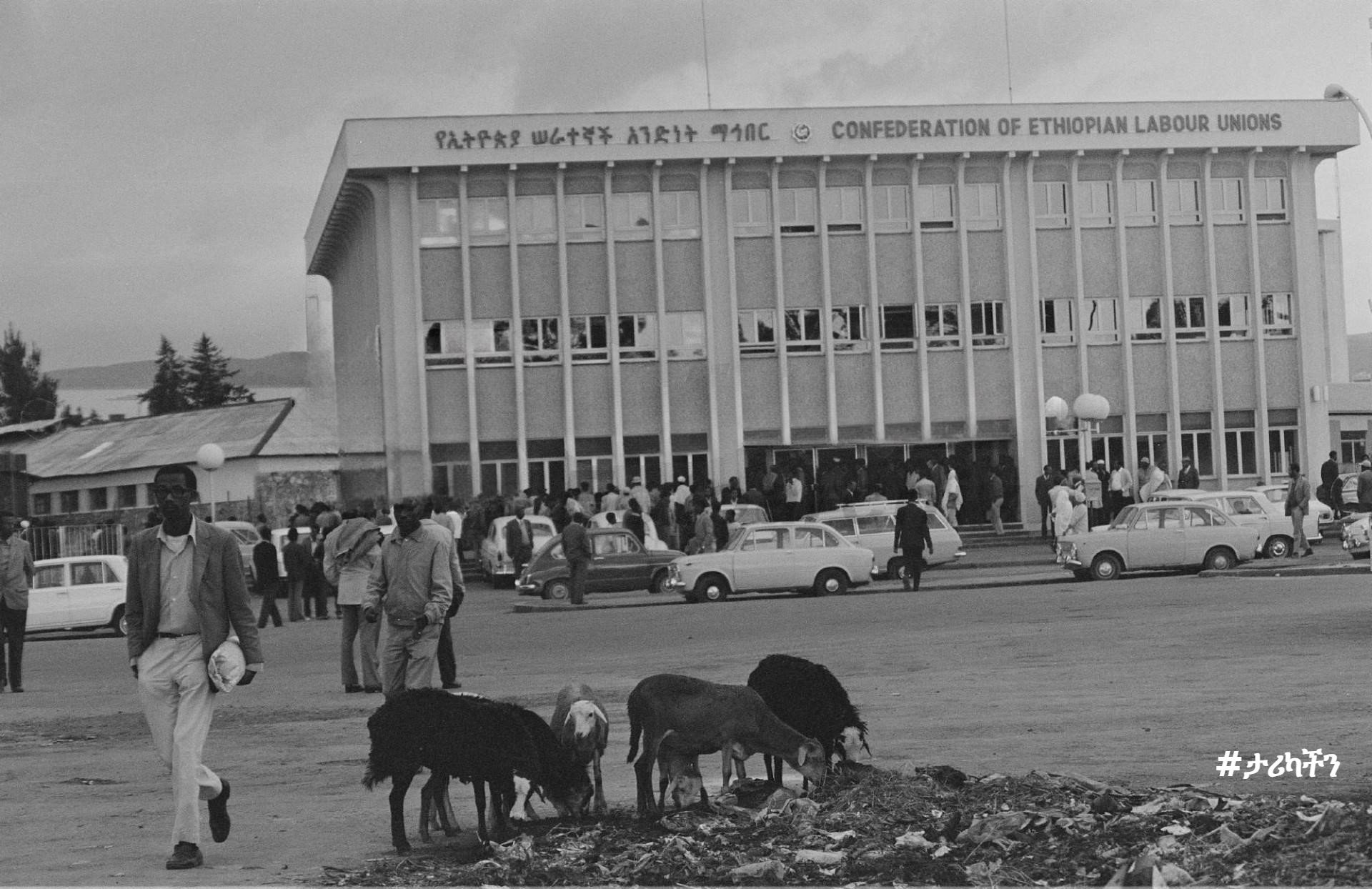
Ethiopia's organized labour movement is one of the oldest in Africa. The Confederation of Ethiopian Labour Unions (CELU) was founded in 1963 under Emperor Haile Selassie I as the first national labour federation in the country.
After the 1974 revolution the Derg dissolved CELU and replaced it in 1977 with the All-Ethiopia Trade Union (AETU) — Yemella Ityopiya Serategnoch Mahber, የመላ ኢትዮጵያ ሰራተኞች ማህበር — a centralised federation bound to the Workers' Party of Ethiopia. AETU brought every union into a single state-controlled body, with branches in every nationalised factory and government enterprise. May Day under AETU was less a bargaining day than a state ceremony.
After the fall of the Derg in 1991 the federation was reorganised as the Confederation of Ethiopian Trade Unions (CETU), the body that organises Labour Day in Ethiopia today. CETU brings together the industrial federations of textile and garment workers, leather and shoe workers, transport, banking and insurance, food and beverage, construction, and others, and represents Ethiopian workers at the International Labour Organization (ILO).