Mawlid (Birthday of the Prophet) in Ethiopia መውሊድ
Mawlid (መውሊድ, also Mewlid, Mawlid an-Nabi) is the Islamic celebration of the birthday of the Prophet Muhammad. It is observed on 12 Rabi' al-Awwal in the Hijri calendar.
The date varies each Gregorian year because the Hijri calendar is purely lunar. Mawlid is a public holiday in Ethiopia. The largest celebration is at Harar, the walled medieval medina in eastern Ethiopia called the fourth holy city of Islam, and at the shrine of Sheikh Hussein in the Bale Mountains.
Origin and history
Mawlid emerged as a public observance in the 11th century and spread through the Muslim world over the following centuries, reaching North Africa, the Sahel, the Indian subcontinent, and Southeast Asia.
In Ethiopia, the celebration has its richest expression at the shrine of Sheikh Hussein (Sheikh Nur Hussein) in the Bale Mountains in southeastern Oromia, and in the walled medina of Harar. Harar is one of the oldest continuously inhabited Muslim cities. Its 16th-century walls enclose 82 mosques (three of them dating from the 10th century) and 102 shrines, making it one of the densest concentrations of Islamic religious architecture in the world. Harari Mawlid traditions go back to the 13th century.
How Ethiopians celebrate Mawlid
Dhikr and Mawlud poetry
Long communal recitations of poems praising the Prophet's birth, life, and intercession are sung from sunset to dawn in the great Sufi orders that have shaped Ethiopian Islam for centuries: the Qadiriyya, the Tijaniyya, the Sammaniyya, and the local Ethiopian Sufi paths centered on Sheikh Hussein. Drumming, hand-clapping, and call-and-response chanting carry the night.
Pilgrimages
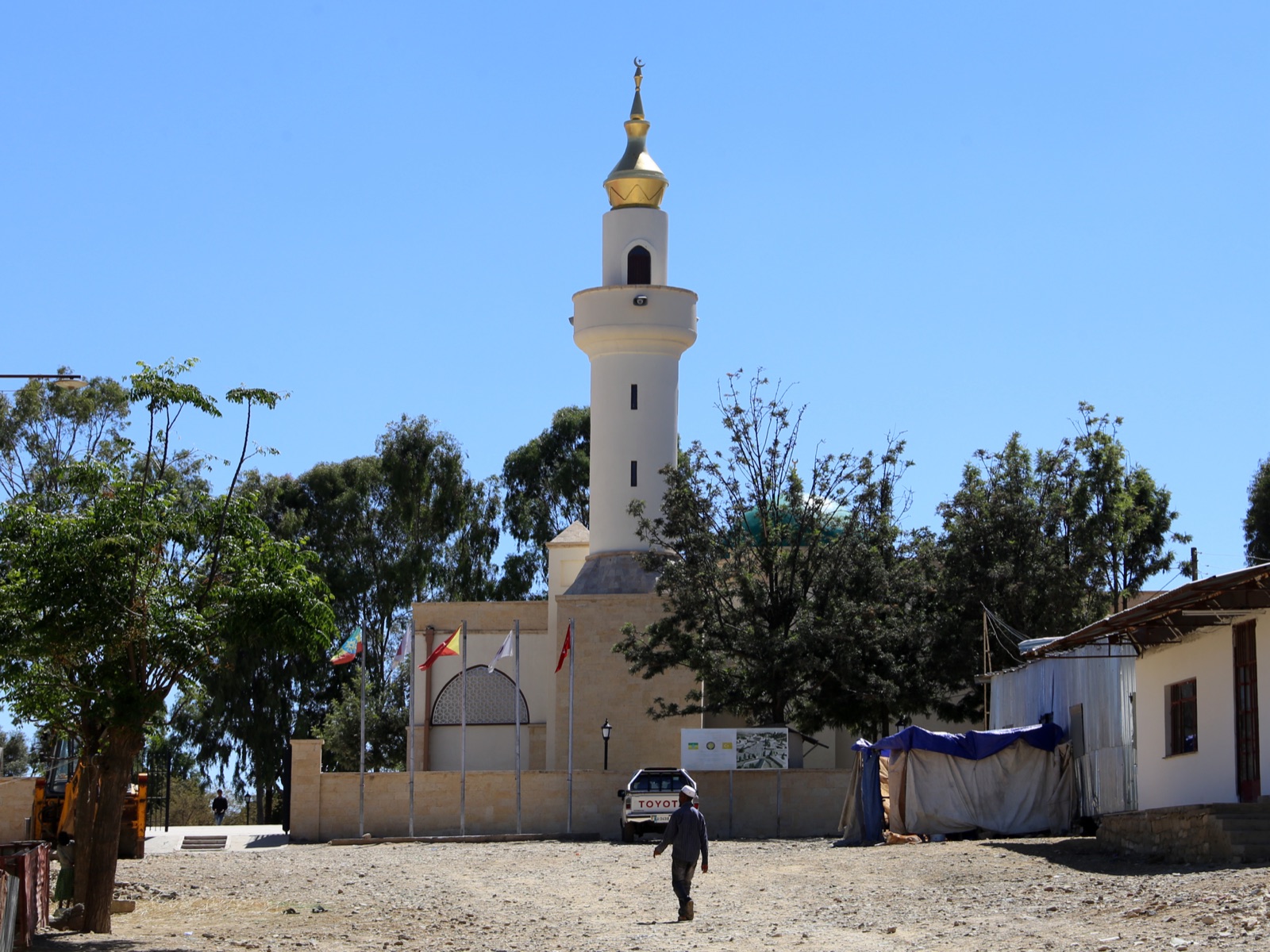
Tens of thousands travel to Sheikh Hussein in Bale, to Harar's mosques, to Wollo's shrines, and to the Negash Mosque in Tigray, the oldest mosque in Africa and, by tradition, one of the oldest in the world, dated to the First Hijra (~615 CE). The pilgrimages combine prayer, dhikr (remembrance of God), social gathering, and trade. Some pilgrims walk for days from rural villages, carrying staffs (uleh) traditional to the Sheikh Hussein pilgrimage.
Communal meals
Sharing of food, especially sweet dishes such as halwa, elaborate spiced rice, and traditional Harari pastries, with neighbors regardless of religion. Many Christian neighbors are invited. The hospitality is part of the centuries-old habit of inter-religious life in Ethiopia, especially in mixed cities like Harar, Dire Dawa, and Addis Ababa.