Patriots' Victory Day (Arbegnoch Qen) in Ethiopia የአርበኞች ቀን
Patriots' Victory Day, Yarbegnoch Qen (የአርበኞች ቀን), is the national holiday that honors the Ethiopian patriots (the Arbegnoch) who resisted the Italian Fascist occupation between 1936 and 1941.
It marks May 5, 1941, the day Emperor Haile Selassie I returned in triumph to Addis Ababa after five years in exile, escorted into the capital by Ethiopian patriot fighters and Allied forces, exactly five years after the Italian army had marched in.
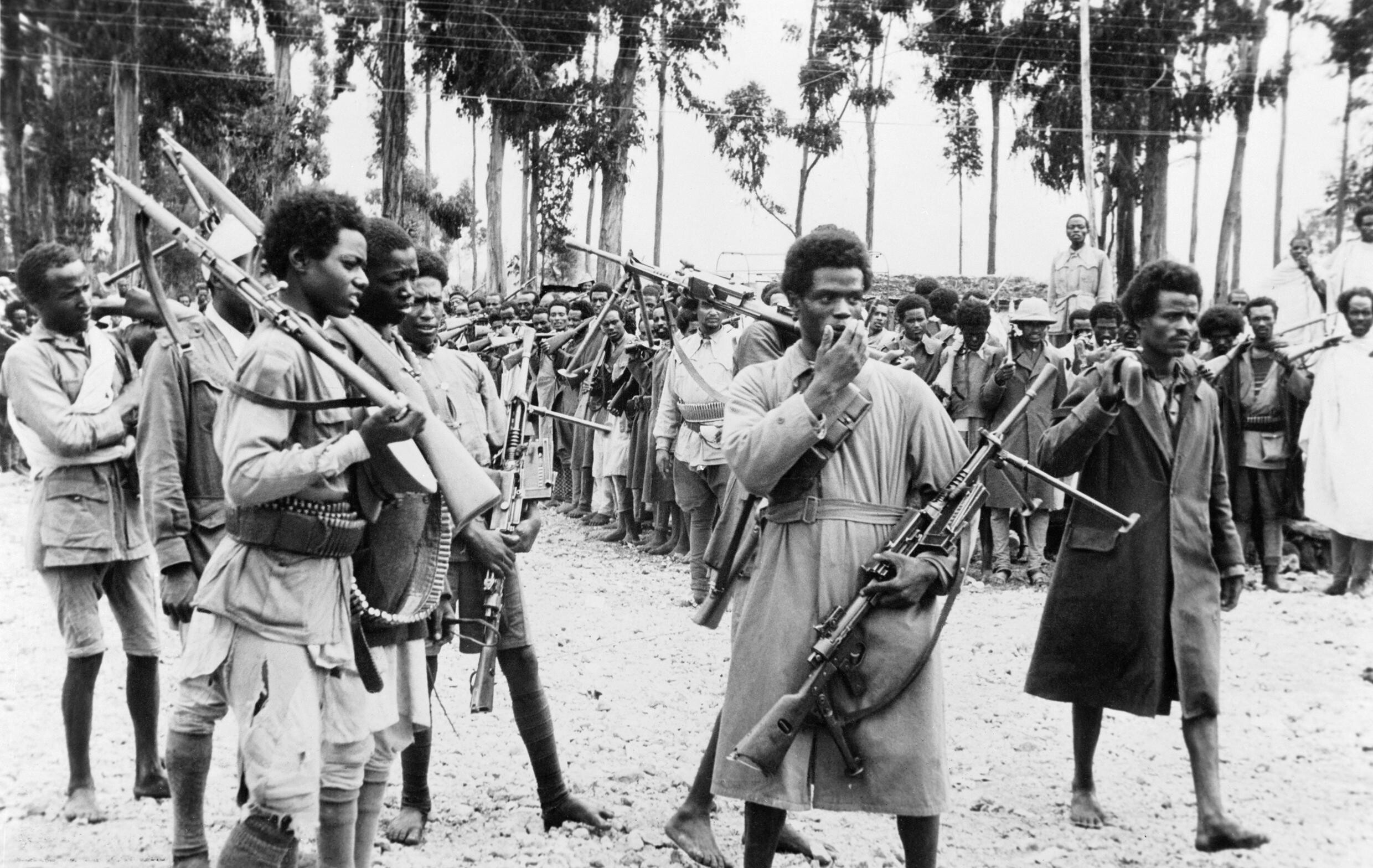
The Italian occupation and the Arbegnoch resistance
Italy under Mussolini invaded Ethiopia in October 1935, used poison gas against Ethiopian forces in violation of the Geneva Protocol, and entered Addis Ababa in May 1936. Mussolini declared the Italian Empire of East Africa.
He never controlled the country. The Arbegnoch (the Patriots) waged a guerrilla war from the highlands of Gojjam, Shewa, Begemder, and Wollega for five years, harassing Italian columns, raiding garrisons, and tying down hundreds of thousands of Italian troops who had expected to administer a pacified colony. Many Arbegnoch were peasant farmers and minor nobility who took up arms in their own districts. Empress Menen led the Ethiopian community in exile in London. Emperor Haile Selassie, having addressed the League of Nations in Geneva in 1936 with one of the most quoted speeches of the 20th century, waited in Bath for the war's tide to turn.
When Italy declared war on Britain in June 1940, the East African Campaign opened. Ethiopian Arbegnoch joined the British-led Gideon Force under Orde Wingate, the South African and Indian divisions advancing from Kenya, and the Sudanese Defence Force advancing from the west. By April 1941 Addis Ababa was free. On May 5, 1941, exactly five years to the day after the Italian entry, the Emperor walked back into his capital. Ethiopia became one of the founding members of the United Nations.
How Ethiopians celebrate Patriots' Day
The central ceremony is held at the Tigil Fre Monument (the "Reward of Struggle" monument) in Addis Ababa, where surviving patriots and their descendants gather in green-yellow-red sashes. The Patriots' Association leads the procession. Military bands play. Schools hold assemblies recounting the names of the major Arbegnoch leaders, including Belay Zeleke, Abebe Aregai, Geresu Duki, Mesfin Sileshi, and the women patriots Shewareged Gedle, Lekyelesh Beyan, and Kebedech Seyoum.
Patriots' Day in African history
Together with Adwa, Patriots' Day completes the story of Ethiopia as the only African nation to have repelled and outlasted European colonization. The Arbegnoch resistance is one of the longest sustained African anti-colonial guerrilla campaigns and a direct ancestor of the African liberation movements that followed in Algeria, Kenya, Angola, Mozambique, Zimbabwe, and Namibia. Ethiopia's place as the home of the African Union, in the heart of Addis Ababa, rests on the moral weight of these two days, Adwa and May 5.