Timket (Ethiopian Epiphany) in Ethiopia ጥምቀት
Timket is the Ethiopian Orthodox Tewahedo feast of Epiphany, commemorating the baptism of Jesus in the Jordan River. It falls on January 19 every Gregorian year (January 20 the year before a leap year), or Tir 11 in the Ethiopian calendar. The celebration runs across three days: Ketera (the eve), Timket itself, and the tabot return procession the day after.
Timket is the most visually spectacular holiday of the Ethiopian religious year. UNESCO inscribed it on the Representative List of the Intangible Cultural Heritage of Humanity in 2019.
History and origin
Timket comes from the gospel account of John the Baptist baptizing Jesus in the Jordan, but its Ethiopian form is unique. Each parish church carries its tabot, a sacred replica of the Ark of the Covenant kept inside the church's Holy of Holies, in procession outside the church walls. This is the only day of the year the tabot leaves its sanctuary.
The veneration of the tabot draws on Ethiopia's ancient claim to the original Ark of the Covenant. The Kebra Nagast, the Ethiopian national epic written down in the 14th century from older oral tradition, recounts that the Ark was brought to Aksum from Jerusalem by Menelik I, son of King Solomon and the Queen of Sheba (Makeda). The Ark is said to rest today in the Chapel of the Tablet next to the Church of Our Lady Mary of Zion in Aksum.
How Ethiopians celebrate Timket
Ketera, the eve (January 18)
In the late afternoon, priests and deacons carry the tabots, wrapped in colored brocade and shaded by ceremonial umbrellas, from each church to a body of water. Some go to natural rivers, some to purpose-built bathing pools. The procession is led by chanting in Ge'ez, drumming on the kebero, the metallic shake of the sistrum, and clouds of incense. Crowds dressed in white netela line the route singing and ululating.
Timket morning (January 19)
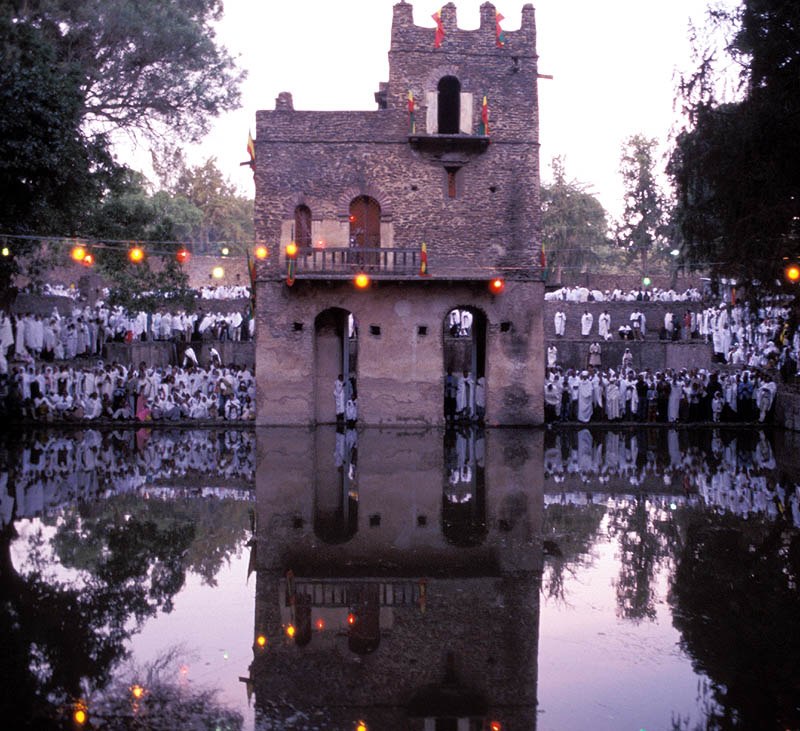
Before dawn the priest blesses the water. The faithful are sprinkled or fully immersed. Many plunge in fully clothed to renew their baptism. The most famous gathering is at Fasilides' Bath in Gondar, a 17th-century stone-walled pool built by Emperor Fasilides specifically as a Timket pool. Lalibela and Addis Ababa's Jan Meda also draw enormous crowds.
Tabot return procession
Each tabot is carried back to its home church in a slow, dancing procession. Parishioners follow behind in their best traditional clothes. Young men perform shilela (warrior chants) and women ululate. The combination of color, water, song, and drum is one of the world's great religious spectacles.
A UNESCO-recognized Ethiopian festival
Timket is one of three Ethiopian celebrations on the UNESCO Representative List of the Intangible Cultural Heritage of Humanity, alongside Meskel (2013) and the Sidama New Year Fichee-Chambalaalla (2015). Gondar's 17th-century stone-walled bath, built by Emperor Fasilides, is one of the few pieces of religious architecture in the world built for a single annual ceremony. The bathing complex is a piece of Ethiopian engineering as distinctive as the rock churches of Lalibela.